
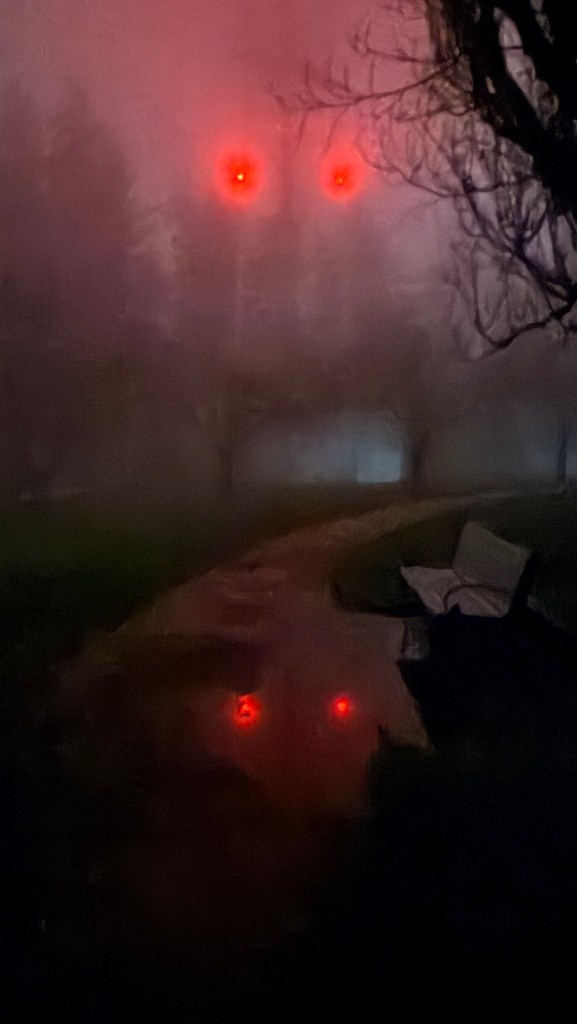
Music: https://aetherinvader.bandcamp.com/album/mazzitalizt
It feels impossible to ignore how closely this body of work now sits alongside the decade-long arc of Stranger Things as it approaches its finale. What began in 2016 as a nostalgic sci-fi horror about bikes, basements, and government labs slowly revealed itself to be something else entirely: a story about fractured realities, institutional secrecy, psychic children, and the thin membrane between the world we’re told we live in and the one we feel pressing in from the other side.
The “Upside Down” was never just a monster dimension, it was a metaphor for misalignment. A parallel world created not by magic, but by experimentation, neglect, and power operating faster than ethics. In that sense, Stranger Things has spent ten years dramatizing the same anxieties these records were quietly scoring in 2020: invisible systems shaping reality, children absorbing forces they didn’t consent to, and a society realizing too late that the breach had already happened.
As the series closes its loop, these albums read like field recordings from outside the screen, evidence that the Upside Down didn’t stay fictional. It seeped into algorithms, pandemics, propaganda, spiritual disorientation, and the lives of a generation growing up fluent in parallel realities. The finale doesn’t just end a show; it lands in a world that has, in many ways, caught up to its warning.
Five Records Written Just Before the World Changed
February–October 2020
Between February and October of 2020, I wasn’t trying to predict the future so much as listen closely to the present. The world was already broadcasting what was coming, through signals, statistical noise, spiritual static, and cultural micro-tremors. These five instrumental electronic albums are the residue of that listening. They were composed as systems rather than statements, maps rather than manifestos. Each title is a key; each record a chamber tuned to a specific disruption that would soon become unavoidable.
Together, Mazzitalizt, CERNiverse, AO (World), Raskryvat’sya, and GEN ALPHA AQUARIUS form a sequence: collapse, inversion, mourning, exposure, and indoctrination. The music is instrumental because language was already failing amidst the political rhetoric and AI manipulation.
MAZZITALIZT
(COVID, the maze, the shuffle)
The word Mazzitalizt doesn’t translate cleanly. It’s meant to feel disorienting, like being dropped into a maze that keeps re-routing itself while you’re inside it. That was COVID before it had a name: not just a virus, but a procedural nightmare that scrambled time, labor, intimacy, and movement. But as I watched the news in February I knew the pandemic was coming. By March, Friday the 13th, the rest of the world became aware of what I saw on the horizon.
Sonically, this record is built on interruption. Rhythms stutter, patterns almost cohere and then dissolve, melodies appear only to be quarantined from themselves. The album doesn’t “progress” so much as circulate, mirroring the way days blurred and systems revealed how fragile their logistics really were. This was the sound of society being shuffled, one arbitrary rule change at a time. Consider it my take on the elevator music toward societal purgatory.
CERNIVERSE
(Quantum disruption and the upside-down)
If Mazzitalizt documents surface-level chaos, CERNiverse drops beneath it. The title is a collision: CERN and universe, science and myth, collider and cosmology. It’s also a nod to the Stranger Things “upside down” a pop-culture shorthand for what happens when familiar reality suddenly feels phase-shifted and inverted toward darkness.
This record explores the sense that something fundamental had slipped alignment. Not exploded, misaligned. The music leans into spatial unease: detuned harmonics, dissonant harmonious structures, sounds that feel like they’re answering from the wrong side of the room. It reflects a growing intuition that technological power, quantum, computational, informational, was outpacing humanity’s spiritual and ethical integration of it.
Whether or not one believes in literal quantum disruption, the psychological effect was real: people felt unmoored. CERNiverse lives in that vertigo.
AO (WORLD)
(Polynesia, polytheism, and disappearance)
AO means “world” in Māori, but it also implies light, realm, and existence itself. This album sits at a subtle but heavier crossroad: the continued erosion of Polynesian cultures just as Western media began selectively aestheticizing them.
The irony is painful. Visibility increased while sovereignty vanished. Symbols survived while systems died.
The sound palette here is more spacious, tidal, patient. There’s grief in it, but also reverence. Repetition functions like liquid dynamics rather than loop. This is a record about worlds ending not with explosions, but with paperwork, tourism, and algorithmic flattening. Polytheism, many gods, many truths—gives way to singular narratives optimized for export. Each song title, its own god.
AO isn’t exotic. It’s ecstatic.
RASKRYVAT’SYA
(Unfurling the manipulation)
Raskryvat’sya translates from Russian as “to unfurl” or “to reveal,” and that verb choice is deliberate. Cambridge Analytica didn’t invent manipulation; it revealed it at scale across both China and Russia as they sought the power the U.S. didn’t ever really owned but nevertheless, claimed. Western society didn’t collapse, it opened, like a silk thread pulled too hard along an old seam.
This album is sharper, more angular. Data-like pulses, coercive rhythms, motifs that feel persuasive rather than expressive. The music behaves the way targeted propaganda behaves: repeating just enough, escalating emotionally, never quite letting silence calm the nervous system.
What unfurled during this period wasn’t just electoral interference, it was the realization that identity itself had become a vector. Politics, belief, outrage, and faith were suddenly modular, deployable, optimizable. The record doesn’t accuse; it anatomizes.
GEN ALPHA AQUARIUS
(The iPad prophets)
The final album looks forward in a way, but that’s also the most unsettling part. GEN ALPHA AQUARIUS points to the children raised on touchscreens, recommendation engines, and perpetual content streams. Aquarius promises enlightenment, collectivity, and vision. Gen Alpha receives that promise filtered through apps, influencers, and ideologically funded “educational” media.
The music is deceptively crisp. Clean tones, synthetic innocence, lullaby-adjacent structures that mask something instructional underneath. This is the sound of belief systems delivered frictionlessly. Not through sermons, but through autoplay and urban exploitation.
Far-right religious revival doesn’t arrive wearing robes, it arrives as a futuristic church, a robotic classroom video, a 1984-adjacent “values” explainer in every classroom, optimized for engagement. This record isn’t about blaming children. It’s about recognizing how early and how softly indoctrination now occurs.
What Comes Next…
These albums were never meant to explain themselves fully. The titles are doors; the tracks are corridors. Song names, artwork, and deeper references are intentionally left for listeners to uncover, because discovery is part of the work. By 2027, many of the patterns hinted at here will feel obvious, even inevitable.
But in 2020, they were still whispers.
This body of work isn’t prophecy in the mystical sense. It’s pattern recognition rendered as sound. Five records written at the moment the world began telling us, very clearly, who it was about to become, if we were willing to listen.
Best order to listen (chronologically)…
Feb 2020
https://aetherinvader.bandcamp.com/album/mazzitalizt
May 2020 Pt 1
https://aetherinvader.bandcamp.com/album/cerniverse
May 2020 Pt 2
https://aetherinvader.bandcamp.com/album/ao-world
June 2020
https://aetherinvader.bandcamp.com/album/raskryvat-sya
Oct 2020
https://aetherinvader.bandcamp.com/album/gen-alpha-aquarious



 ION WRAY MEDIA
The retrospective framing of these five albums as an unwitting chronicle of 2020’s unraveling has a certain inevitability to it now, with the benefit of distance. Treating the sequence as a progression from procedural collapse to algorithmic indoctrination captures something of the era’s creeping disorientation, rendered through purely instrumental means.
What stands out is the commitment to systems over explicit narrative—stuttering interruptions in Mazzitalizt, detuned spatial unease in CERNiverse, tidal mourning in AO—allowing the structures themselves to evoke institutional overreach and cultural erosion without recourse to words. It avoids the pitfalls of much pandemic-era art that leaned too heavily into direct commentary.
The analogy to Stranger Things feels apt not for superficial parallels but for the shared sense of an inverted reality bleeding through, documented here in sonic residue rather than fiction. One wonders how these pieces hold up divorced from their contextual origin, or whether that anchoring is precisely what gives them lasting resonance.